In the world of digital marketing, “micro-moments” have become a central concept.
We’re told to be present, to be useful, and to be quick when customers reflexively turn to their devices to act on a need. But treating these moments as a purely logistical challenge of timing and targeting is to miss the forest for the trees.
The real opportunity isn’t just being there when a customer searches; it’s understanding the complex psychological state of that customer in the moment.
Winning in today’s market requires a shift from logistical precision to emotional and psychological intelligence.
This article will take you on a journey from the fundamental neuroscience of how our brains process a “moment” to the cognitive biases that shape our decisions within them. We will conclude with a practical playbook for engineering “do moments” that don’t just capture attention, but drive meaningful action.
What Is a “Moment”? From Brain Pulse to Buy Button
To master the moment, we must first understand what it is. It’s not just a unit of time, but a multi-layered construct that begins with the basic mechanics of the brain and culminates in the commercial actions we can observe.
At its most fundamental level, our perception of the world is not a continuous stream but is assembled from discrete snapshots. Neuroscience refers to this as the “psychological moment,” a window of time lasting roughly 50 to 60 milliseconds. This is the brain’s native processing speed, and it’s the scientific reason why modern consumers demand instant answers and frictionless digital experiences.
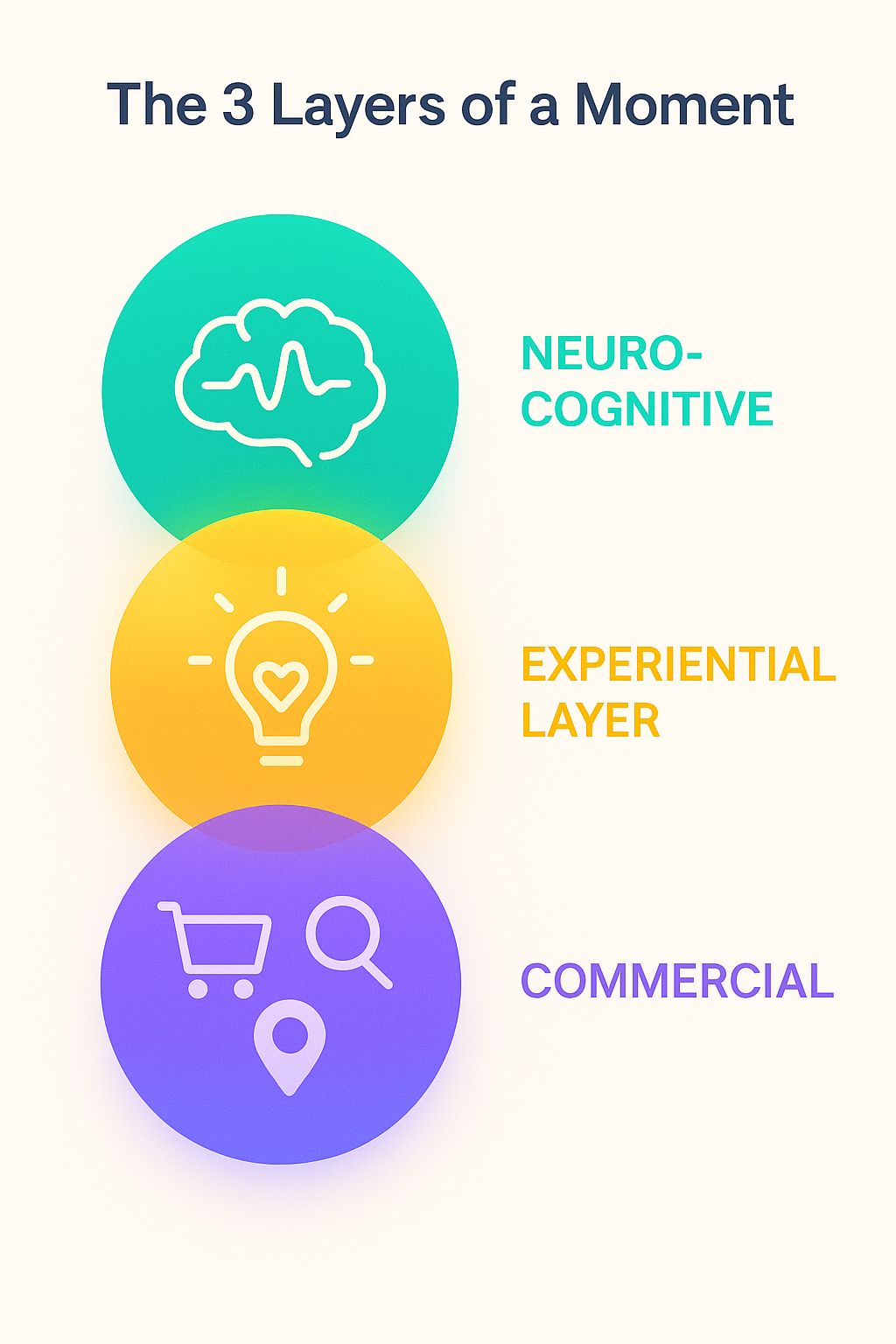
This foundational layer gives rise to our conscious experiences, which ultimately manifest as the commercial “micro-moments” marketers can target. We can think of a “moment” as having three distinct layers:
- The Neuro-Cognitive Layer: The brain’s processing clock speed, where multiple stimuli are bundled into a single event. This is why speed and seamlessness feel so right to users.
- The Experiential Layer: The conscious feeling of insight or connection. This includes the “Aha!” moment of solving a problem and the micro-moments of positive connection that build trust and emotional bonds.
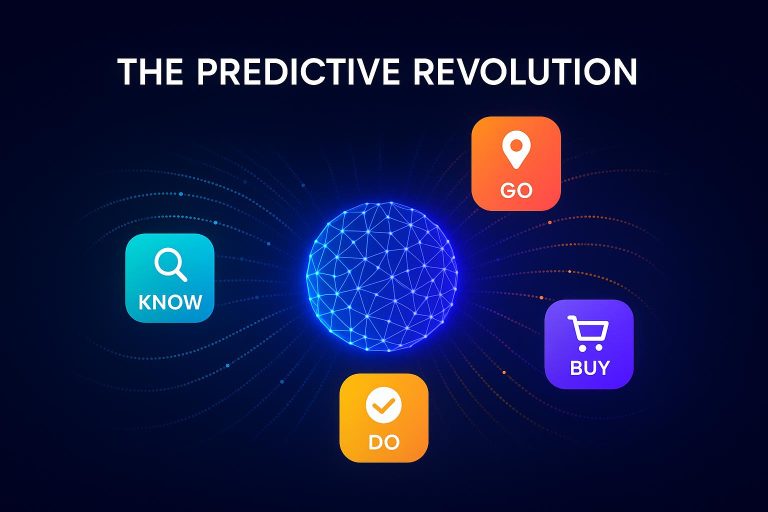
- The Commercial Layer: The observable, intent-rich actions consumers take on their devices, which fall into four classic types: I-want-to-know, I-want-to-go, I-want-to-do, and I-want-to-buy.
Why We Really Click and Commit
To effectively engineer “do moments,” one must understand the psychological mechanisms that compel a consumer to act. Human decision-making is not a purely logical process; it’s a complex interplay of emotion, unconscious processing, and mental shortcuts.
The foundational principle of modern consumer psychology is the dominance of emotion. Research suggests that over 95% of all purchase decisions are driven by unconscious, emotional factors. We are far more likely to make a decision based on an emotional response and subsequently construct a logical justification for that choice.
This emotional landscape is navigated by what Nobel laureate Daniel Kahneman calls the brain’s two systems. System 1 is our “autopilot”—fast, intuitive, and emotional—while System 2 is our deliberate, analytical mind. Most “do moments” are the domain of the fast-acting System 1. If a brand’s website is confusing or presents too many choices, it forces an unwelcome shift to the laborious System 2, often leading to “decision fatigue” and abandonment.
To navigate the world efficiently, our System 1 brain relies on mental shortcuts known as cognitive biases. These predictable patterns provide a blueprint for how consumers actually think.
Here are a few key biases that shape the customer journey:
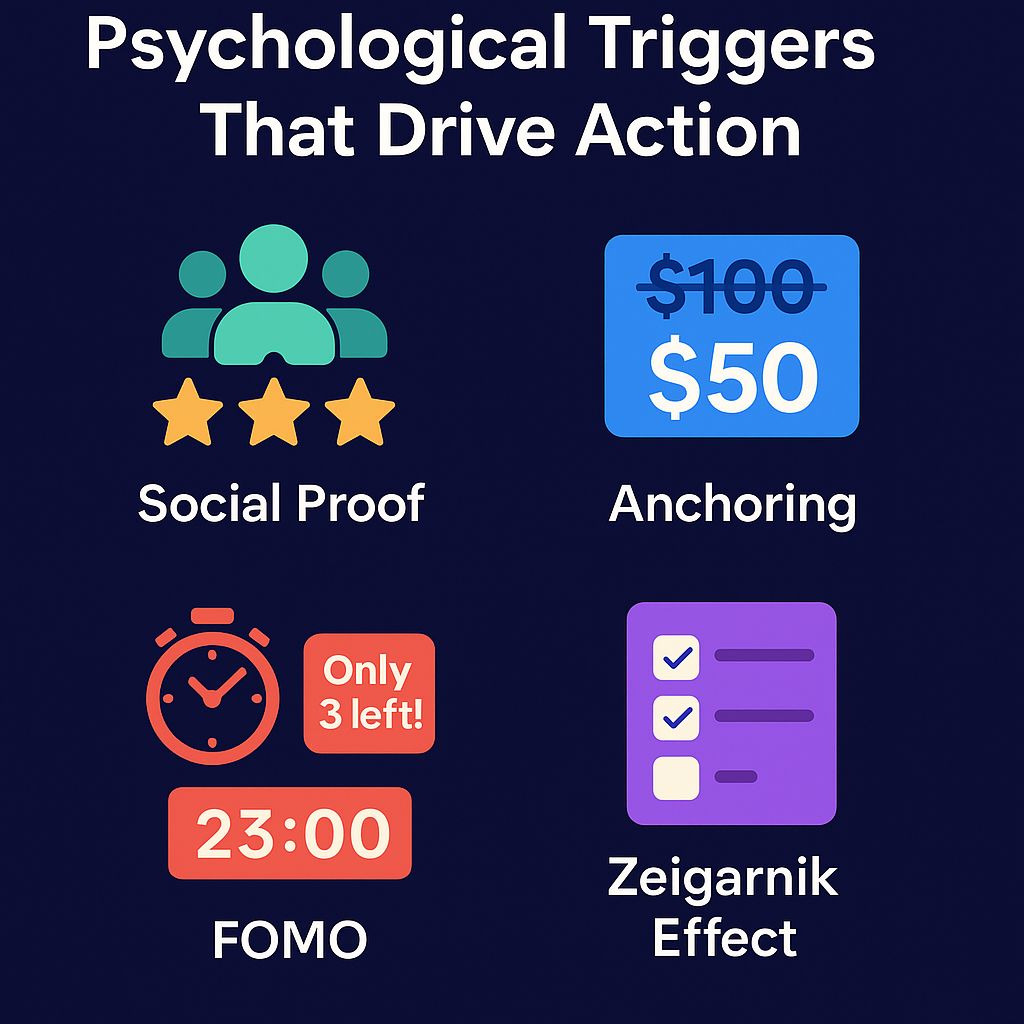
- Social Proof (or Bandwagon Effect): The tendency to assume the actions of others reflect the correct behavior. This is why testimonials and user ratings are so persuasive.
- Anchoring Bias: The tendency to rely too heavily on the first piece of information offered. Displaying a high “original price” next to a lower sale price makes the sale price seem more attractive.
- Fear of Missing Out (FOMO): The apprehension that one might miss out on a rewarding experience. Limited-time offers and scarcity indicators (“only 3 left!”) are potent triggers that compel immediate action.
How to Engineer “Do Moments”
Understanding the theory is one thing; applying it is another.
The key to translating these psychological insights into action is the strategic use of behavioral triggers. These are automated actions or communications activated in response to a specific user behavior, designed to spark an emotional response and prompt a desired action.
A strategic approach involves matching the right trigger to the right moment. For example, in an “I-want-to-do” moment, the customer is seeking competence. The psychological goal for the brand is to deliver an “Aha!” moment. An effective tactic is to provide a clear “how-to” video that empowers the user and creates a feeling of accomplishment.
In the critical “I-want-to-buy” moment, the goal is to reduce friction and nudge a decision. Here, you can deploy a range of triggers:
- Social Proof: Display customer testimonials prominently on product pages to build trust and provide reassurance.
- Urgency & Scarcity: Use countdown timers for sales or display low stock levels (“only 2 left”) to trigger FOMO.
- Completion: Send abandoned cart reminders. This tactic leverages the Zeigarnik Effect—our innate psychological tendency to feel tension over unfinished tasks.
This table offers a strategic playbook for connecting these concepts:
| Micro-Moment | Psychological Driver | Effective Marketing Tactic |
| I-want-to-do | Need for competence, “Aha!” moment | Provide “how-to” video tutorials or interactive checklists. |
| I-want-to-buy (Consideration) | Need for reassurance, ambiguity avoidance | Display customer reviews and offer a clear, no-hassle return policy. |
| I-want-to-buy (Urgency) | FOMO, Loss Aversion | Use time-limited offers and scarcity messages like “Only 3 left in stock.” |
| Cart Abandonment | Zeigarnik Effect (unfinished task) | Send a reminder email showing the items left behind with a small, time-sensitive discount. |
From a Single Moment to Lasting Momentum
A single well-executed micro-moment can win a sale. A series of them can win a customer for life. This is because repeated, positive interactions do more than just satisfy a customer; they rewire their brain.
Behavioral science shows that small, consistent actions, or “mini-habits,” strengthen neural pathways, making a behavior more automatic over time. Each time your brand delivers a fast, useful solution, it reinforces a mental shortcut in the customer’s brain.
The foundation of this process is the consistent delivery of “value moments”—pivotal points where the customer experiences a significant benefit or satisfaction. By consistently creating these small but meaningful moments, you build a deep well of trust, which is a more powerful predictor of growth than either product features or price.
Often, the strongest loyalty is forged when things go wrong. A complaint or a missed delivery is a test of a brand’s character. A brand that handles these moments with speed and empathy can turn a potential failure into a powerful loyalty-building experience.
The Dawn of Emotionally Intelligent Marketing
The old marketing mantra of delivering the “right message to the right person at the right time” is no longer enough.
The future of marketing lies in a new, more powerful paradigm: delivering the right feeling, to the right mental state, in the right cognitive context.
This represents a fundamental shift from logistical targeting to psychological intelligence. The ultimate “do moment” isn’t a single click to buy. It is the moment a customer concludes, after hundreds of small, positive, and emotionally resonant micro-moments, that your brand is an indispensable partner in their life.
This is a decision that cannot be forced in a single interaction, but one that is earned over time, moment by moment.
The brands that understand this—that see every interaction not as a chance to sell, but as a chance to build trust—are the ones that will thrive.