The modern point of purchase is no longer a physical counter or a desktop browser window. It’s the glowing screen in your customer’s pocket.
The mobile device has become the new storefront, personal shopping assistant, and cash register, all rolled into one powerful, ever-present tool.
Within this dynamic ecosystem, countless interactions occur, but the most critical for any business is the “I-Want-to-Buy” moment. That fleeting, intent-driven instant when a user decides to make a purchase.
This article will serve as a strategic roadmap for brands seeking to master these moments. We will deconstruct the modern mobile purchase journey, from the initial spark of interest to the final, frictionless transaction. Finally we will explore the psychology of the mobile shopper, map their fragmented path to purchase, and provide a detailed blueprint for engineering a checkout experience that converts.
The Anatomy of Intent: Understanding the Mobile “Micro-Moment”
To win in the mobile arena, you must first understand the new battleground. Coined by Google, “micro-moments” are the brief, intent-rich instances when people reflexively turn to a device to act on a need: to know, go, do, or buy. These moments are the new front line where consumer preferences are shaped and brand loyalty is won or lost.
The framework categorizes consumer intent into four distinct types:
- I-Want-to-Know moments for research
- I-Want-to-Go moment for local discovery
- I-Want-to-Do moment for task assistance
- I-Want-to-Buy moment for commercial intent
This is the critical juncture where a consumer is ready to make a purchase and is actively seeking help in deciding what or how to buy.
A remarkable 90% of smartphone users are still undecided on a specific brand when they begin their online search. This uncertainty transforms each micro-moment into a prime opportunity for any brand to influence a purchasing decision directly.
The modern mobile shopper is a product of their environment. Conditioned by years of app usage, they are impatient and have an extremely short attention span, expecting immediacy, relevance, and convenience above all else. Their phone is not just a device; it’s a “supercomputer in our pockets,” an extension of their decision-making process.
To meet these expectations, brands must adopt a foundational strategy built on three simple but powerful imperatives:
- Be There: Anticipate the moments of need and ensure your brand is visible, whether through organic search, local listings, or paid ads.
- Be Useful: Presence isn’t enough. The content and experience you deliver must be directly relevant to the consumer’s immediate need, providing helpful answers and clear information.
- Be Quick: Mobile users operate on an accelerated timeline. Your experience, from page load to final purchase, must be fast and frictionless.
Navigating the “Messy Middle”: Mapping the Fragmented Customer Journey
The traditional, linear sales funnel, a predictable path from awareness to consideration to purchase, is obsolete. It has been replaced by the “customer journey map,” a flexible, non-linear model where customers fluidly jump between stages, channels, and devices according to their in-the-moment needs.
A critical component of this journey is the native retail app. Time spent in retail apps has more than doubled in recent years, and it’s common for users to have two to five retail apps on their phones. These apps are powerful tools for fostering loyalty and driving sales.
For brands, a dedicated app is no longer a luxury but a strategic imperative for cultivating their most valuable customers.
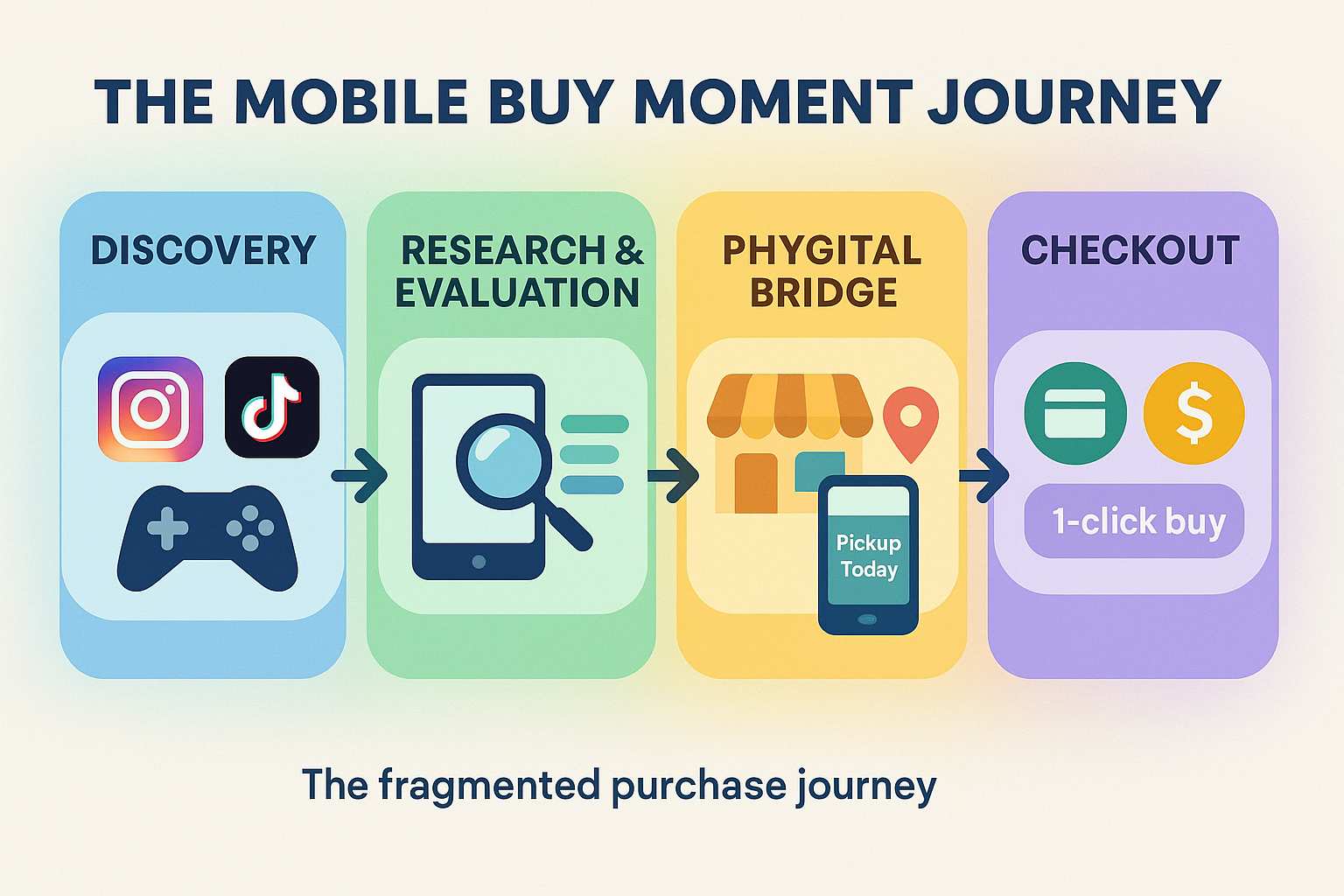
This fragmented journey can be understood through several key stages and touchpoints:
Discovery
The journey often begins not with a direct search, but with passive discovery. 53% of consumers report discovering new products through mobile ads, with social media apps (45%) and gaming apps (38%) being the most common venues. Platforms like Instagram, TikTok, and Facebook have evolved from social networks into powerful engines for product discovery.
Research and Evaluation
Once a need is identified, the mobile device becomes the primary tool for research. This behavior is pervasive even within physical stores, where 82% of smartphone users consult their phones for purchases they are about to make. This phase is being dramatically accelerated by AI-driven search tools, which allow users to ask highly specific, high-intent questions like, “What is the best waterproof blender under $100 available near me?” and receive curated answers, drastically compressing the path-to-purchase.
Bridging Digital and Physical
Mobile serves as the indispensable bridge connecting a brand’s digital presence with its physical footprint. A significant 67% of shoppers use their mobile devices to look up store locations or hours before visiting, and 41% have placed an order online for in-store pickup (BOPIS). This blending of the physical and digital, or “phygital,” experience is now the standard consumer expectation.
The Apex of Conversion: Engineering a Frictionless Mobile Checkout
After navigating the complex journey of discovery, the consumer arrives at the final, most critical stage: the mobile checkout. This is the point of maximum friction.
An alarming 84% of users report having experienced difficulty completing a mobile transaction, leading to high cart abandonment rates. Engineering a seamless, intuitive, and trustworthy checkout process is a fundamental requirement for converting mobile intent into revenue.
A truly optimized checkout is not just a technical achievement but a psychological one. The goal is to make the customer feel “comfortable,” “at ease,” and “calm,” avoiding any design choices that could induce feelings of being “scared or guilty” due to unexpected charges or a confusing interface.
A Blueprint for a Seamless Checkout
A comprehensive approach to mobile checkout optimization can be broken down into four key areas:
UI/UX and Design
The visual design sets the stage. Adopt a single-column, vertical layout to eliminate frustrating horizontal scrolling. Use large, easily tappable buttons (a minimum of 44×44 pixels is a common guideline) with clear, action-oriented text like “Complete Purchase”. The checkout page should be a sanctuary for the transaction; remove all distracting elements like pop-ups or navigation menus that could pull the user away.
Process Simplification
Every unnecessary field or click is an opportunity for abandonment. One of the most critical optimizations is offering a guest checkout option; forcing users to create an account is a major deterrent. Minimize form fields to only what is absolutely essential. Leverage browser autofill capabilities and use a visible progress indicator (e.g., Shipping > Payment > Confirmation) to manage expectations and give the user a sense of control.
Payment and Trust
This step involves financial information, making trust paramount. Offer a variety of payment methods, including standard credit cards, popular digital wallets like Apple Pay and Google Pay, and Buy Now, Pay Later (BNPL) services. Digital wallets are crucial as they enable one-tap “express checkouts,” dramatically reducing friction. Visibly display security badges and SSL certificates to reassure shoppers that their data is secure.
Data and Accuracy
Ensure the accuracy of the information collected. Integrate real-time address verification and autocompletion tools to prevent typos and reduce failed deliveries. Be transparent about all costs, including shipping and taxes, as early in the process as possible to prevent “sticker shock” at the final step.
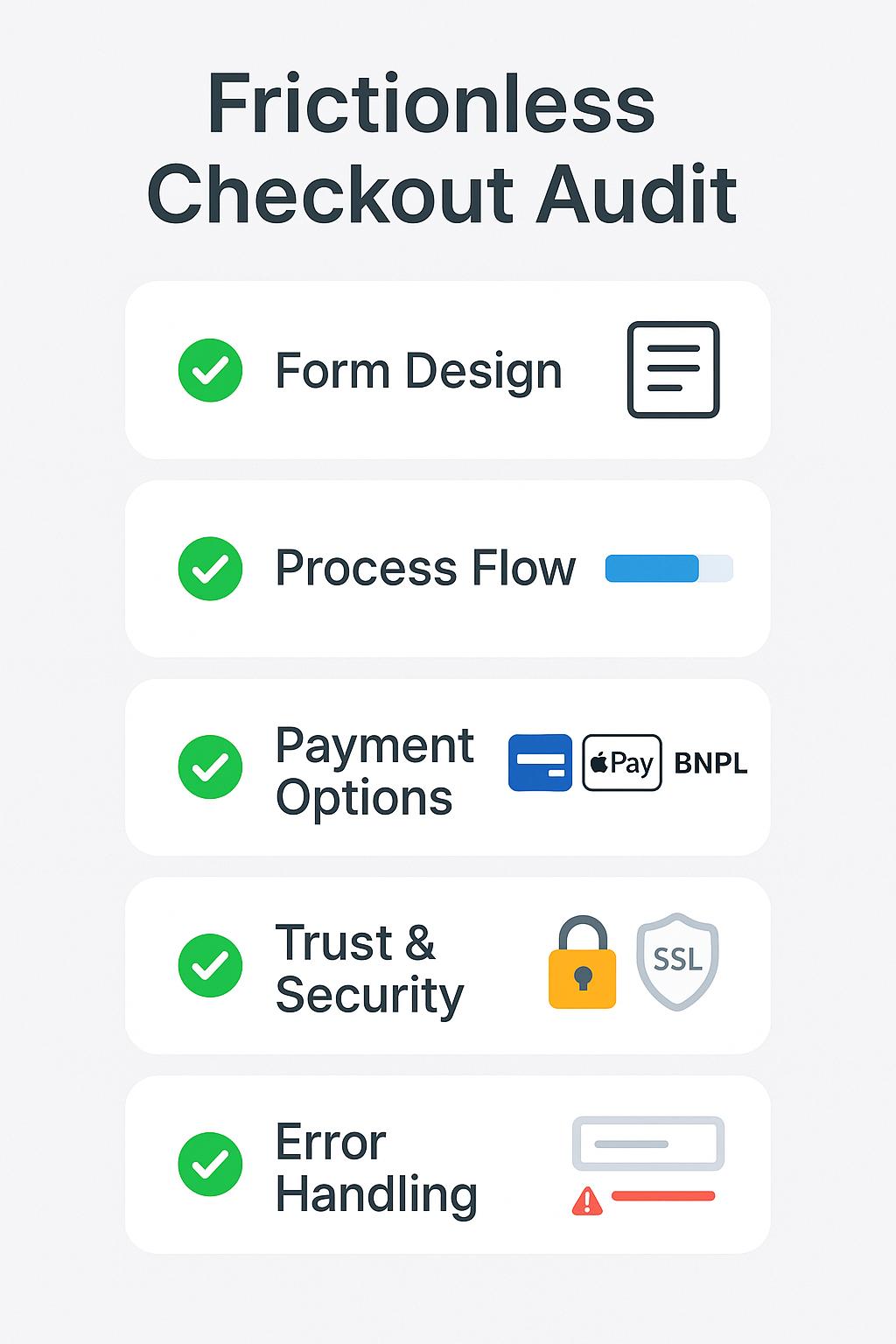
Actionable Tool: The Frictionless Checkout Audit Checklist
| Component | Best Practice Standard |
| Form Design | Single-column layout with a prominent, floating CTA. |
| Process Flow | Guest checkout is offered and clearly visible. A visual progress indicator is displayed at the top of the screen. Browser autofill and smart address completion are enabled. |
| Payment Options | Multiple payment methods are offered (Cards, Digital Wallets, BNPL). One-click express checkout options are available. |
| Trust & Security | Security badges (SSL, payment provider logos) are prominently displayed. All costs (shipping, taxes) are displayed upfront and transparently. |
| Error Handling | Field validation occurs in real-time with clear, inline error messages. |
Your Strategy for the Mobile-First Future
The mobile buy moment is the epicenter of modern commerce.
Winning in this dynamic environment requires a holistic strategy that combines a deep understanding of consumer psychology, meticulous journey mapping, technical excellence in checkout design, and strategic foresight into the technologies of tomorrow.
Success is no longer determined by brand size alone, but by a brand’s ability to be present, useful, and quick in the moments that matter most.
As you move forward, remember the guiding principles: Be Present, Be Useful, Be Quick, and above all, Be Seamless. The brands that will dominate the future of commerce are those that obsess over removing friction and adding value at every single mobile touchpoint of the customer’s journey.